Karline is doing a one-year volunteering service with the European Solidarity Corps at the Foyer de l’Enfance in Strasbourg, France. Here, she shares her experiences.
Six months ago, I boarded a train in Dresden to travel to Alsace, where my ESC was to begin with a two-week seminar. At that time, I had no idea where or how I would be living for the next year, what my work would look like, or how I would be provided with meals. It was a little unsettling to set off into the unknown like that, but fortunately everything turned out to be very nice in the end.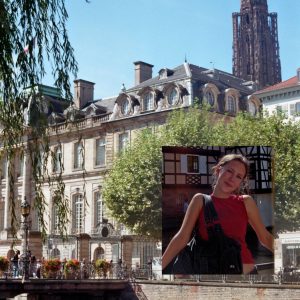
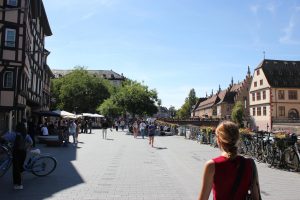
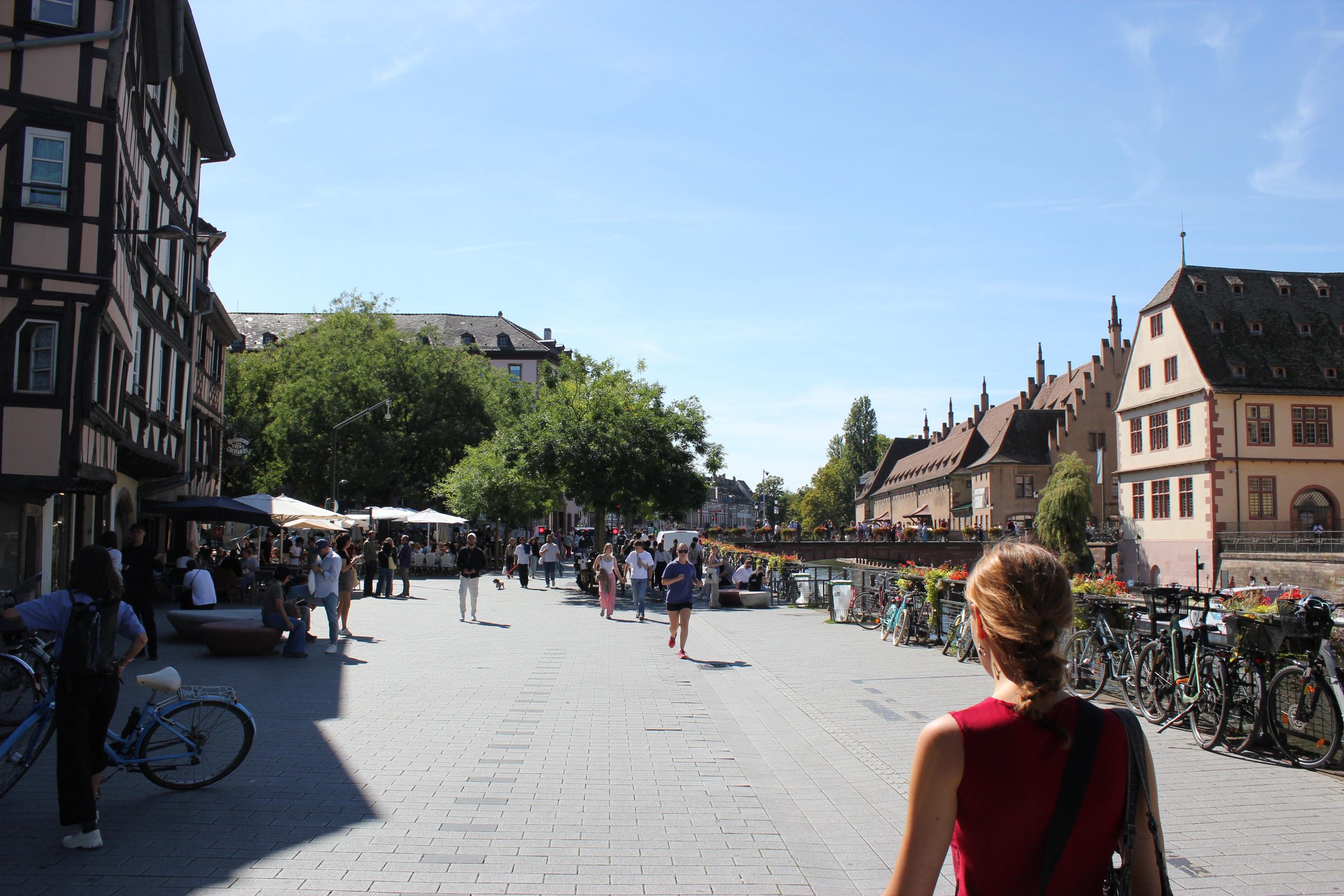
By now, the apartment in the center of Strasbourg that I share with my fellow volunteer has started to feel like home. At work, I have developed my routines, and our trusted cashier already almost knows the number of our supermarket vouchers by heart. Five days a week, I take a half-hour bus ride to the ‘Foyer de l’Enfance’; sometimes that means leaving at six in the morning, sometimes not until midday, as my 35 working hours per week are very flexible.
The Foyer is a children’s home that serves as an initial point of care for emergencies, often involving neglect or domestic violence. The children, aged between 0 and 18, live there for an average of six months until a permanent home can be found for them.
I have now become a regular member of the ‘Explorateurs’ (Explorers) team, a group of up to ten children between the ages of three and six. My daily work consists of helping them get ready, accompanying them during meals, and taking them to and picking them up from school and appointments, to play with them a lot and put them to bed in the evenings.
In between, there are always household tasks to take care of, but there is also time to get involved in craft or baking projects or to organize small outings. Because of what the children have already had to go through in their lives, their behavior is not always easy, and it has sometimes been — and still is — quite a challenge for me to assert myself.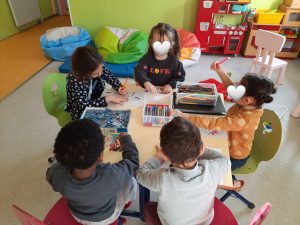
However, this kind of social work is especially rewarding, as the children often show me very enthusiastically how happy they are that I am there, and over time they have become just as dear to me.
Fortunately, the volunteer network quickly brought me friends, with whom I, among other things, sing in a church choir. There, thanks to many friendly grandmas and grandpas, we regularly learn about Alsatian customs and quirks. The culture feels very familiar, from people’s names to the architecture and even the culinary specialties — there are many similarities on both sides of the border.
Because of this, I didn’t really experience culture shock in the sense of feeling out of place in the country or among the people. Sometimes, however, I did wish for some fresher experiences. Luckily, thanks to several seminars and the people I met there, I have already been able to travel to Paris and Troyes. Soon, I will go to Brittany, and a vacation in the south of France is also already planned.
I feel that over the past six months I have already learned a lot and have started to live in a more mature and conscious way. Even the challenge of dealing with things abroad, like property management, the bank, and driving school, helps you grow. Communication with our coordinating organization in France (l’Initiative Chrétienne d’Europe) has unfortunately not always been easy and has cost us more than a few nerves.
Working full-time with young children, some of whom also have intellectual disabilities, is something completely new for me. Additionally, at the Foyer, I see the breakdown of families, the effects of violence, and how the law intervenes — which is both terrible and eye-opening, giving me a deeper awareness of such situations. And yes, this year abroad also contributes to ‘self-discovery’ .
When I move back to Germany in six months, it will certainly not be easy to say goodbye to Strasbourg. But the advantage of a year abroad in a neighboring country is that I can always return to my temporary home.